
Lyrebirds
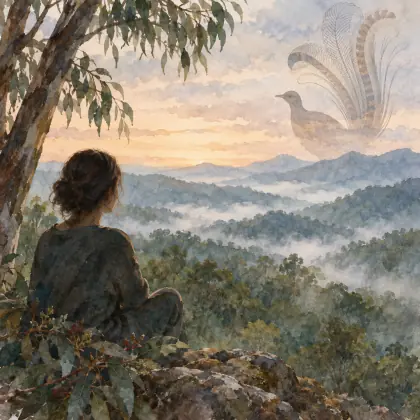
Over the west side of the mountain, that’s lyrebird country. I could go down there, they say, in the early morning, and I’d see them, I’d hear them. Ten years, and I have never gone. I’ll never go. I’ll never see the lyrebirds - the few, the shy, the fabulous, the dying poets. I should see them, if I lay there in the dew: first a single movement like a waterdrop falling, then stillness, then a brown head, brown eyes, a splendid bird, bearing like a crest the symbol of his art, the high symmetrical shape of the perfect lyre. I should hear that master practising his art. No, I have never gone. Some things ought to be left secret, alone; some things – birds like walking fables – ought to inhabit nowhere but the reverence of the heart.
Lyrebirds - meaning Summary
Choosing to Keep Wonder Secret
Judith Wright's Lyrebirds records a speaker who knows of a place where lyrebirds live but refuses to visit. The birds are imagined as fragile, fabulous, and likened to dying poets, and as makers of exquisite, private art. The speaker insists that some wonders should remain unobserved, preserved in the heart's reverence rather than exposed to sight. The poem frames restraint and secrecy as a moral choice about how to relate to nature.
Feel free to be first to leave comment.