
Biography of Judith Wright
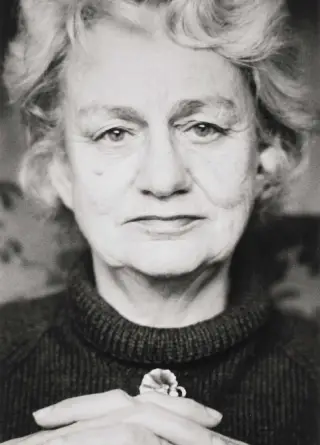
| date | place | |
|---|---|---|
| born | May 31, 1915 | Armidale, Australia |
| died | June 25, 2000 | Canberra, Australia |
Judith Wright (full name Judith Arundell Wright) was an Australian poet, essayist, and public intellectual, widely regarded as one of the major poetic voices of 20th-century Australia. She was born on 31 May 1915 in Armidale and died on 25 June 2000 in Canberra. Alongside her literary career, she became prominent for environmental advocacy and sustained work connected to Aboriginal rights and reconciliation. Wright grew up with a strong sense of the Australian landscape and its history, including the moral weight of colonisation—concerns that later became central to her poems and essays. She studied at the University of Sydney, and in the mid-20th century began publishing poetry that quickly established her national reputation. A decisive life chapter began when she moved to Mount Tamborine with philosopher and writer Jack McKinney (their daughter Meredith was born in 1950). The Tamborine years are often described as creatively and ethically formative: Wright’s writing deepened its attention to ecology and to the long consequences of settlement, and her public activism intensified. Later, she lived for decades near Braidwood, and in her final years moved to Canberra. Wright’s activism was not a “side interest.” She helped co-found (and then led) the Wildlife Preservation Society of Queensland in 1962—known today as Wildlife Queensland—serving as its first president and remaining in that role until 1976. Her conservation work is closely associated with major campaigns to protect natural areas, including the Great Barrier Reef. Wright’s poetry is often praised for being modern in idiom yet highly controlled in technique—clear, musically shaped, and grounded in physical place. She wrote with unusual intensity about the Australian environment, but also about love, time, belonging, and the ethical unease of inheritance. Some of her best-known collections include The Moving Image, Woman to Man, and The Gateway. While she could write intimate lyric poems, she is equally known for poems that confront national history—especially the disappearance of Indigenous presence from landscapes that settlers rebranded as “empty.” (Her poem “Bora Ring” is a common example taught in schools.) Wright matters culturally because she helped shape a distinctly Australian literary conscience: her work repeatedly asks what it means to love a place while recognising the damage done to it—ecologically and historically. In this sense she became a bridge between poetry and public ethics, writing lines that are aesthetically memorable and socially unsettling. She also stands out as a poet whose influence extends beyond literature classrooms into civic life. Her long public role in conservation and her sustained attention to Aboriginal justice made her a reference point for later generations of writers and activists who refused to treat “nature,” “nation,” and “history” as separate topics. Her involvement is linked to treaty and reconciliation debates as well (for example through writing connected with the Aboriginal Treaty Committee). Wright died on 25 June 2000 in Canberra, aged 85. Biographical records commonly give the cause as a heart attack / myocardial infarction, occurring at Canberra Hospital. She was buried in North Tamborine cemetery, alongside her husband.
Feel free to be first to leave comment.