
The Arrowhead
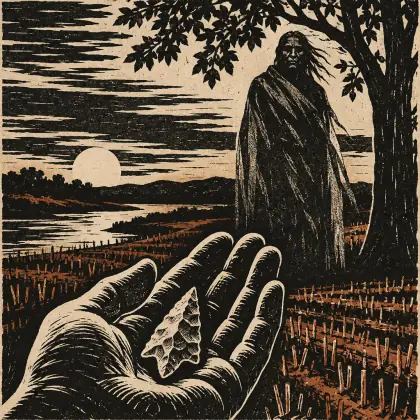
The arrowhead, which I found beside the river, was glittering and pointed. I picked it up, and said, “Now, it’s mine.” I thought of showing it to friends. I thought of putting it—such an imposing trinket— in a little box, on my desk. Halfway home, past the cut fields, the old ghost stood under the hickories. “I would rather drink the wind,” he said, “I would rather eat mud and die than steal as you steal, than lie as you lie.”
The Arrowhead - meaning Summary
Possession Becomes an Accusation
The poem turns a small act of possession into an ethical confrontation. After finding an arrowhead and claiming it as a personal treasure, the speaker meets the imagined spirit of its original maker or owner. The ghost condemns not only taking the object but also the self-justifying story attached to it. The poem questions who has the right to claim artifacts taken from another people's past.
Feel free to be first to leave comment.