
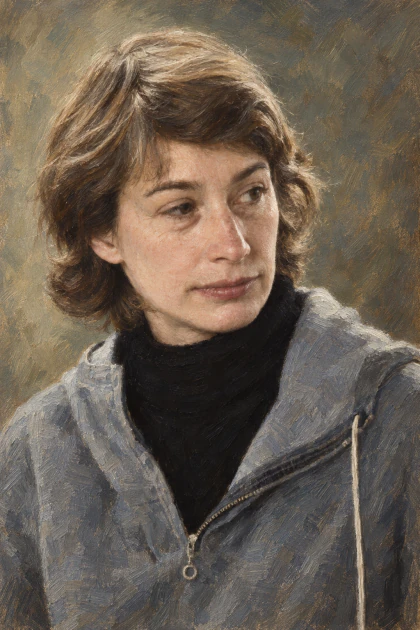
| date | place | |
|---|---|---|
| born | September 10, 1935 | Maple Heights, Ohio, U.S. |
| died | January 17, 2019 | Hobe Sound, Florida, U.S. |
Biography of Mary Oliver
Mary Oliver was an American poet and essayist best known for her deeply observant poetry about nature, spirituality, solitude and the human experience. She was born on 10 September 1935 in Maple Heights, Ohio, near Cleveland, and died on 17 January 2019 in Hobe Sound, Florida, aged 83. Oliver grew up in a difficult home environment and found refuge in the woods near her childhood home. As a young girl, she built small shelters from sticks and grass in the forest and began writing poetry. Her early connection with the natural world would become one of the defining characteristics of her work. She attended Ohio State University and Vassar College, although she did not graduate from either institution. As a young writer, Oliver was strongly influenced by Edna St. Vincent Millay, whose former home she visited and where she helped organize the poet's papers. During this period she also met Molly Malone Cook, who became her longtime partner. Oliver eventually moved to Provincetown, Massachusetts, where the landscape of Cape Cod became a major influence on her poetry. Oliver published her first collection, No Voyage and Other Poems, in 1963. Over the following decades she became one of the most widely read American poets of her generation. Her major collections include American Primitive (1983), Dream Work (1986), New and Selected Poems (1992), Why I Wake Early (2004), Swan (2010), A Thousand Mornings (2012), Dog Songs (2013) and Felicity (2015). Her breakthrough came with American Primitive, which won the Pulitzer Prize for Poetry in 1984. New and Selected Poems later received the National Book Award for Poetry, while Oliver also received a Lannan Literary Award for lifetime achievement and several other major literary honors. Oliver's poetry is famous for its close attention to the natural world. Birds, foxes, dogs, flowers, trees, ponds and the changing seasons frequently become starting points for reflections on consciousness, mortality, love and the meaning of existence. Although her poetry can appear simple and accessible, it often contains philosophical and spiritual questions. Oliver repeatedly asks how a human being should live, what it means to pay attention to the world, and how people should confront death and impermanence. She was also a successful essayist. Her later books included Upstream: Selected Essays (2016) and Devotions: The Selected Poems of Mary Oliver (2017), which introduced her work to another generation of readers. Oliver also had a long academic career. She held the Catharine Osgood Foster Chair for Distinguished Teaching at Bennington College until 2001 and received fellowships from organizations including the Guggenheim Foundation and the National Endowment for the Arts. Mary Oliver was famously private and reluctant to discuss her personal life publicly. She spent much of her adult life with Molly Malone Cook, and the two lived together in Provincetown for many years. Her personal character was closely connected to the qualities found in her poetry: solitude, observation, curiosity and an intense awareness of the world around her. She was an avid walker and spent enormous amounts of time observing the landscape, animals and plants of Cape Cod. Unlike poets whose work is primarily concerned with literary movements or political arguments, Oliver often deliberately turned away from intellectual abstraction toward direct experience. A walk through the woods, watching a bird or observing a flower could become the foundation for a meditation on consciousness or mortality. This accessibility became an important part of her popularity. Her poetry uses relatively clear language while addressing profound questions, allowing readers with little familiarity with modern poetry to engage with her work. Mary Oliver became one of the most widely read American poets of the late 20th and early 21st centuries. Her work occupies an unusual position: she received major literary recognition while also reaching an exceptionally broad audience outside universities and traditional poetry circles. The Poetry Foundation describes her as a major poet of the natural world and notes that her work received both the Pulitzer Prize and National Book Award. Her central contribution was her ability to make nature poetry feel immediate and contemporary. Following in the tradition of poets such as Walt Whitman, William Wordsworth, Ralph Waldo Emerson and Emily Dickinson, Oliver used the natural world to explore the relationship between human beings and existence itself. Yet her poems are rarely simply descriptions of nature. The natural world becomes a way of asking fundamental questions: How should we live? What deserves our attention? How should we understand death? What does it mean to be fully alive? Her distinctive combination of simplicity, observation, spirituality and philosophical depth has made Mary Oliver particularly influential among contemporary readers. Her poems continue to be widely read, anthologized and studied, while collections such as American Primitive, Dream Work and New and Selected Poems have become central works of her literary legacy. Mary Oliver died in Hobe Sound, Florida, on 17 January 2019, aged 83. She left behind a large body of poetry and prose and remains one of the most popular and recognizable American poets of the modern era.
Feel free to be first to leave comment.