
The Lark
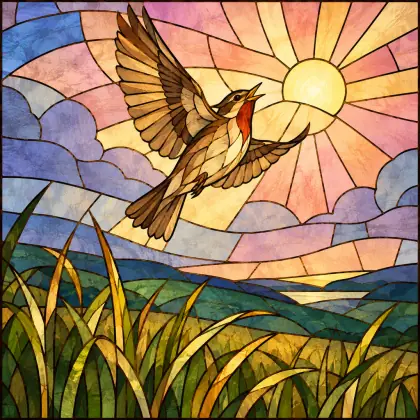
And I have seen, at dawn, the lark spin out of the long grass and into the pink air -- its wings, which are neither wide nor overstrong, fluttering -- the pectorals ploughing and flashing for nothing but altitude -- and the song bursting all the while from the red throat. And then he descends, and is sorry. His little head hangs and he pants for breath for a few moments among the hoops of the grass, which are crisp and dry, where most of his living is done -- and then something summons him again and up he goes, his shoulders working, his whole body almost collapsing and floating to the edges of the world. We are reconciled, I think, to too much. Better to be a bird, like this one -- an ornament of the eternal. As he came down once, to the nest of the grass, “Squander the day, but save the soul,” I heard him say.
The Lark - meaning Summary
Resisting Human Resignation
The poem watches a lark repeatedly force itself into the dawn sky, singing despite its small body's exhaustion. Its descent and renewed ascent become a contrast to human resignation: the speaker believes people accept too much limitation. The bird's effort suggests a way of living that spends itself freely in daily experience while preserving an inner, spiritual seriousness. Nature offers not escape but an example of courageous renewal.
Feel free to be first to leave comment.