
White Night
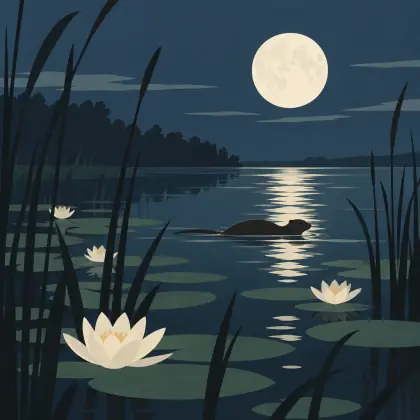
All night I float in the shallow ponds while the moon wanders burning, bone white, among the milky stems. Once I saw her hand reach to touch the muskrat’s small sleek head and it was lovely, oh, I don’t want to argue anymore about all the things I thought I could not live without! Soon the muskrat will glide with another into their castle of weeds, morning will rise from the east tangled and brazen, and before that difficult and beautiful hurricane of light I want to flow out across the mother of all waters, I want to lose myself on the black and silky currents, yawning, gathering the tall lilies of sleep.
White Night - meaning Summary
Surrender to the Natural World
In “White Night,” the speaker watches a moonlit pond and moves from observing its small, intimate life toward a desire for release. The muskrat, moon, weeds, and approaching dawn make human worries seem less necessary. Rather than defending former needs or arguments, the speaker longs to merge with water, darkness, and sleep. The poem presents surrender to the natural world as a way of accepting change, rest, and mortality.
Feel free to be first to leave comment.