
Two Kinds of Deliverance
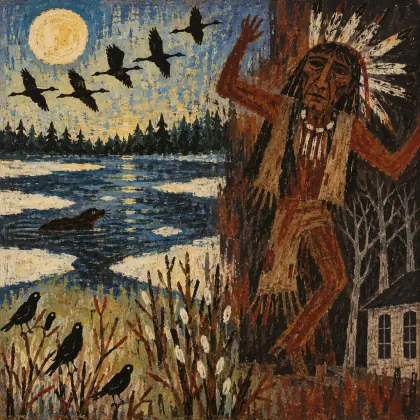
1 Last night the geese came back, slanting fast from the blossom of the rising moon down to the black pond. A muskrat swimming in the twilight saw them and hurried to the secret lodges to tell everyone spring had come. And so it had. By morning when I went out the last of the ice had disappeared, blackbirds sang on the shores. Every year the geese, returning, do this, I don’t know how. 2 The curtains opened and there was an old man in a headdress of feathers, leather leggings and a vest made from the skin of some animal. He danced in a kind of surly rapture, and the trees in the fields far away began to mutter and suck up their long roots. Slowly they advanced until they stood pressed to the schoolhouse windows. 3 I don’t know lots of things but I know this: next year when spring flows over the starting point I’ll think I’m going to drown in the shimmering miles of it and then one or two birds will fly me over the threshold. As for the pain of others, of course it tries to be abstract, but then there flares up out of a vanished wilderness, like fire, still blistering: the wrinkled face of an old Chippewa smiling, hating us, dancing for his life.
Two Kinds of Deliverance - meaning Summary
Renewal Beside Historical Pain
The poem contrasts two kinds of rescue: the recurring return of spring, which carries the speaker beyond despair, and the survival of Indigenous memory amid violence and dispossession. Geese and thawing ice suggest nature's reliable renewal, while the vision of an old Chippewa man makes historical pain immediate rather than abstract. The ending holds both hope and accusation, recognizing that renewal does not erase suffering.
Feel free to be first to leave comment.