
Camden, 1892
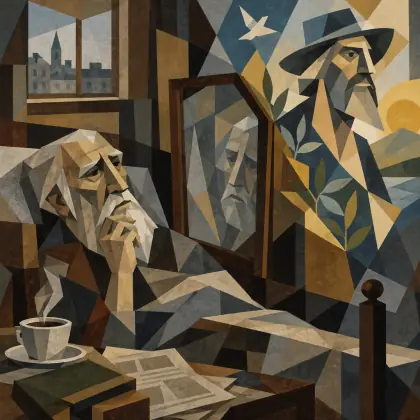
The smell of the coffee and of the papers, Sunday and its tedium. Morning, and on a glimpsed page some allegories in verse, the self-preening publication of a lucky poet whom he knew. He lies, an old man, prostrate and pale, in his respectable poor person’s dwelling, holding the reflection in the dull mirror of his feeble stare. He knows, without surprise now, this face is what he is. His mind elsewhere, his hand touches the unkempt beard, the paralyzed mouth. The end is near. I am almost not, his voice declares. But through my poems drums the pulse of Life in all its splendour. I was Walt Whitman once.
Translated by Allen ProwleCamden, 1892 - meaning Summary
The Body Fades, Poems Endure
The poem imagines the elderly Walt Whitman in poverty and physical decline, reading a younger poet's work while confronting his own changed face. Whitman feels close to disappearance, yet insists that his poems still carry life's force. Borges presents artistic identity as something that can outlast the body: the man is frail and nearly gone, but the poetic voice remains expansive and alive.
Read Complete Analyses
Feel free to be first to leave comment.