
Elegy for a Park
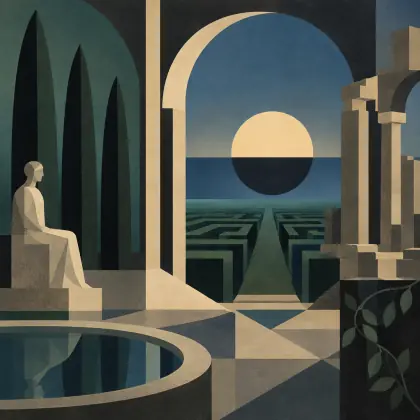
The labyrinth is lost. Lost too all those lines of eucalyptus, the summer awnings and the vigil of the incessant mirror, repeating the expression of every human face, everything fleeting. The stopped clock, the tangled honeysuckle, the arbour, the frivolous statues, the other side of evening, the trills, the mirador and the idle fountain are things of the past. Of the past? If there’s no beginning, no ending, and if what awaits us is an endless sum of white days and black nights, we are already the past we become. We are time, the indivisible river, are Uxmal, Carthage and the ruined walls of the Romans and the lost park that these lines commemorate.
Elegy for a Park - meaning Summary
Time Turns Places to Memory
The poem mourns a vanished park, but its loss becomes a meditation on time itself. Borges links ordinary features of the park to ancient ruined cities, suggesting that human places and identities are continually absorbed into the past. The speaker questions whether past and present can truly be separated: if time has no fixed beginning or end, people already contain the history they will become.
Read Complete Analyses
Feel free to be first to leave comment.