
Chess
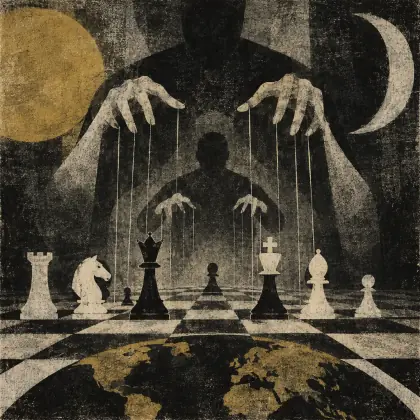
I In their serious corner the players rule their slow pieces. The board delays them till dawn in their strict ambit, where two colors hate each other. Within, magical severities infuse the figures: homeric tower, light horse, armed queen, last king, oblique bishop and assailant pawns. When the players have gone, when time has eaten them, the rite has certainly not stopped. This war was lit in the East, whose amphitheater today is all the world. And as the other, this game is infinite. II Weak king, biased bishop, embittered queen, straight tower and wily pawn, over the black and white of the road they seek and wage armed battle. They do not know that the appointed hand of the player governs their fate, they do not know that an adamantine rigor subjects their will and their journey. The player too is prisoner (the sentence is Omar’s) of that other board, the black nights and the white days. God moves the player and the player moves the piece What God behind God began the weaving of dust and time and dream and the throes of death?
Chess - meaning Summary
Fate Behind Every Move
The poem turns chess into a model of human existence. Its pieces seem to wage their own war, but are controlled by players; the players, in turn, are confined by time and perhaps directed by God. Borges ends by pushing the chain of control further: if God moves the player, what power governs God? The game becomes a meditation on fate, free will, and infinite causation.
Read Complete Analyses
Feel free to be first to leave comment.