
Oedipus and the Enigma
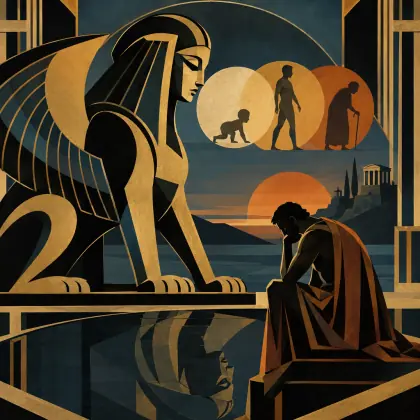
At dawn four-footed, by day standing tall, with three feet through evening’s emptiness wandering, was how the sphinx, eternal, looked upon his inconstant brother, Man. And then there came a man, towards sun set, one able to make out, with horror, in this monstrous image’s mirror the reflection of his own decline and fate. Oedipus we are, and, for eternity, we are this elongated, triple beast, all that we will be, all that we have been. It would destroy us if we were to see our entire being so grotesquely figured. Merciful God makes time run on, lets us forget.
Translated by Allen ProwleOedipus and the Enigma - meaning Summary
Mortality Hidden by Time
The poem reimagines the Sphinx's riddle as a truth about every human life. Oedipus recognizes that the creature changing from four legs to two and then three represents not only man in general but his own movement from infancy through adulthood to old age. Borges ends by suggesting that time and forgetfulness protect people from fully seeing their mortality at once.
Read Complete Analyses
Feel free to be first to leave comment.