
Analysis of The Just
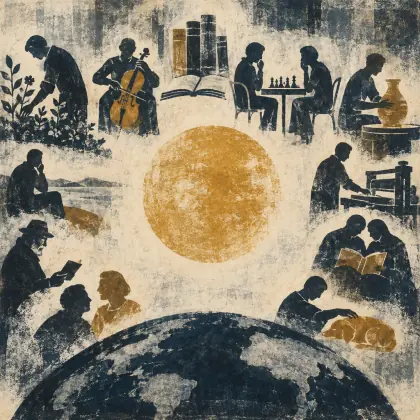
A Hidden Community of the Just
Borges defines justice not through laws, heroic sacrifice, or public virtue, but through modest acts of attention. His just people cultivate gardens, enjoy music, investigate words, shape clay, read together, and stroke a sleeping animal. None of them intends to rescue humanity. Yet the final line makes the poem’s central claim: without knowing
, these ordinary people are saving the world
. What preserves the world, Borges suggests, is not grandeur but the quiet continuation of care, curiosity, patience, and humility.
The Garden and the Café
The opening gardener recalls the ending of Voltaire’s Candide, where cultivating one’s garden becomes an answer to fruitless philosophical argument. The garden is limited, practical, and local: the man does not claim to repair history, only the ground within his reach. A similar modesty governs the pair in the Southern café. Their silent game of chess
joins thought, companionship, and peaceful competition. Silence here is not emptiness; it is a form of intimacy in which two people can share a world without needing to dominate it with speech.
Other figures preserve reality through exact attention. The potter meditates on colour and form
, while someone discovers an etymology with pleasure
. These activities do not produce moral slogans, but they resist carelessness. The potter respects matter; the lover of etymology respects the histories concealed inside language. Even gratitude for music or for Stevenson’s existence becomes an ethical act because it acknowledges that delight is received rather than possessed.
The Displeased Typographer
The most playful figure is the typographer who set this
, especially because Borges adds though perhaps not pleased
. The typographer helps transmit the poem without necessarily admiring it. This complicates any sentimental picture of goodness: one need not feel inspired, pure, or cheerful to contribute to the world. Competent work can have value independently of personal enthusiasm. The line also turns the poem toward its own material existence. Before a reader can encounter these words, an almost invisible worker must arrange and preserve them.
Mercy Without Triumph
The poem becomes more explicitly moral near the end. Stroking a sleeping creature
requires tenderness toward something vulnerable and unaware. More difficult is the person who justifies, or seeks to
, a wrong done to him. The hesitant qualification matters: justice may lie not in successfully forgiving an injury, but in sincerely attempting to understand it. Borges does not praise the wrong itself. He praises the effort to interrupt resentment before it becomes another wrong.
The person who prefers the others to be right
carries this humility furthest. Normally, being right is treated as a victory of the self. To prefer another’s correctness is to value truth above pride and shared understanding above personal triumph. Yet there is a productive contradiction here: these people are called just even though they do not consciously pursue justice. Their goodness depends partly on its lack of self-advertisement. If they acted in order to see themselves as saviors, their virtues might harden into vanity.
Saving What Cannot Be Measured
The final claim is deliberately immense beside the smallness of the examples. No single chess game, shaped pot, affectionate gesture, or literary pleasure can literally prevent catastrophe. But together such acts preserve the conditions that make a world human: trust, craft, memory, beauty, forgiveness, and regard for lives beyond one’s own. Borges’s tone is calm and declarative, with no appeal to reward or recognition. The world is saved quietly because these people keep worthwhile things in existence—and because they do so without imagining that the world belongs to them.
Feel free to be first to leave comment.