
Biography of Seamus Heaney
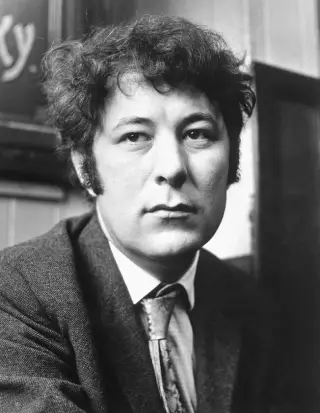
| date | place | |
|---|---|---|
| born | April 13, 1939 | Tamniaran, Northern Ireland |
| died | August 30, 2013 | Dublin, Ireland |
Seamus Heaney was an Irish poet, playwright, translator, essayist and academic who became one of the most important English-language poets of the 20th century. He was born on 13 April 1939 at Mossbawn, a family farm near Castledawson in County Derry, Northern Ireland. Heaney was the eldest of nine children and grew up in a Catholic farming family. His childhood in rural County Derry had a lasting influence on his poetry. Fields, farm work, animals, peat bogs, tools and family life became recurring subjects and images throughout his work. At the age of twelve, Heaney won a scholarship to St Columb's College in Derry, where he developed an interest in literature. He later studied English at Queen's University Belfast, where he became involved in Belfast's literary community and began publishing poetry. Among the writers who influenced him were William Wordsworth, John Keats, Gerard Manley Hopkins, Robert Frost, W. B. Yeats and Patrick Kavanagh. Heaney's first major collection, Death of a Naturalist, appeared in 1966 and immediately established him as an important new poet. His later collections included North, Field Work, Station Island, The Haw Lantern, Seeing Things, The Spirit Level, Electric Light, District and Circle and Human Chain. The political conflict in Northern Ireland, known as the Troubles, became an important background to his poetry. Heaney did not generally approach the conflict as a straightforward political commentator. Instead, he explored violence, history, identity and memory through individual experiences and the Irish landscape. His poems about bog bodies, for example, connected ancient history with the violence of contemporary Northern Ireland. Heaney was also an accomplished translator. His 1999 translation of Beowulf became particularly famous, bringing the Old English epic to a wide modern audience in vivid and accessible English. In 1995, Heaney received the Nobel Prize in Literature. The Swedish Academy praised his poetry for its “lyrical beauty and ethical depth.” He also held important academic positions at Harvard University and Oxford University, where he served as Oxford Professor of Poetry from 1989 to 1994. Heaney married Marie Devlin in 1965, and they had three children. Despite becoming an internationally famous writer, he remained strongly connected to his family, childhood and rural Irish background. Friends and colleagues often described Heaney as warm, generous and humorous, with a self-deprecating personality. He was also known for encouraging younger writers and students. His personal origins remained central to his writing. Although he became a celebrated professor and Nobel laureate, he repeatedly returned to the ordinary experiences of his childhood: farming, family, work and the landscape of County Derry. His poetry often transforms these apparently simple subjects into reflections on memory, mortality, history and human relationships. Seamus Heaney occupies a particularly important place in Irish literature and English-language poetry. His work brought the landscapes, history and cultural memory of Ireland—especially Northern Ireland—to an international audience. One of his greatest achievements was turning highly specific experiences into universal poetry. A childhood memory, a farming tool, a peat bog or a family relationship could become a meditation on much larger subjects such as death, identity, violence and the passage of time. Heaney also demonstrated how the English language could express a distinctly Irish experience. He drew on Irish history, culture and rural vocabulary while engaging deeply with the wider English literary tradition. The combination of beautiful language, historical awareness, ethical seriousness and attention to ordinary life made Heaney one of the defining poets of the second half of the 20th century. His work remains widely read and studied in schools and universities around the world. Seamus Heaney died in Dublin on 30 August 2013, aged 74. He left behind a major body of poetry, translations and essays and remains one of Ireland's most influential literary figures.
Feel free to be first to leave comment.