
Year’s End,
Year’s end, all corners of this floating world, swept.
Translated by Lucien Stryk
time
haiku
austere
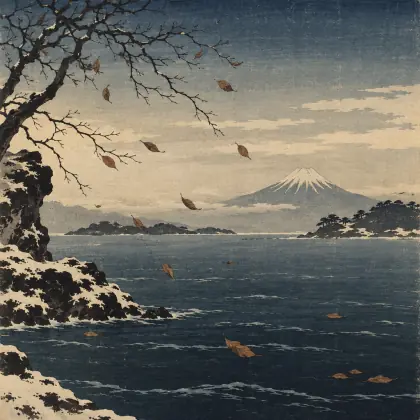
Year’s End, - form Summary
Haiku Compresses a Year's Sweep
As a haiku, this poem compresses a seasonal moment into a single image: Year's end
functions as a kigo framing the scene. The sweeping action across the poem’s corners of the floating world suggests ritual clearing and Buddhist impermanence. The spare form forces a rapid leap from concrete gesture to larger meaning, leaving readers to supply associations. This economy of language makes the closing moment feel immediate and open-ended.
Feel free to be first to leave comment.