
Fallgrief’s Girl-friends
Not that she had no equal, not that she was His before flesh was his or the world was; Not that she had the especial excellence To make her cat-indolence and shrew-mouth Index to its humanity. Her looks Were what a good friend would not comment on. If he made flattery too particular, Admiring her cookery or lipstick, Her eyes reflected painfully. Yet not that He pitied her: he did not pity her. “Any woman born”, he said, “having What any woman born cannot but have, Has as much of the world as is worth more Than wit or lucky looks can make worth more; And I, having what I have as a man Got without choice, and what I have chosen, City and neighbour and work, am poor enough To be more than bettered by a worst woman. Whilst I am this muck of a man in this Muck of existence, I shall not seek more Than a muck of a woman: wit and lucky looks Were a ring disablign this pig-snout, And a tin clasp on this diamond.” By this he meant to break out of the dream Where’s admiration’s giddy mannequin Leads every sense to motley; he meant to stand naked Awake in the pitch dark where the animal runs, Where the insects couple as they murder each other, Where the fish outwait the water. The chance changed him: He has found a woman with such wit and looks He can brag of her in every company.
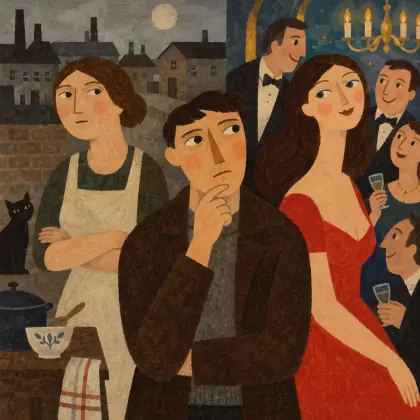
Fallgrief’s Girl-friends - meaning Summary
Ideals Defeated by Desire
The poem portrays a man who rejects romantic idealisation and claims he wants an ordinary partner suited to his own flawed, harsh existence. His speech treats beauty and wit as distractions from a more elemental truth about human life. The ending sharply undercuts this philosophy: when he happens to find a woman with both qualities, he proudly displays her, exposing the gap between his professed values and desire.
Feel free to be first to leave comment.