
View of a Pig
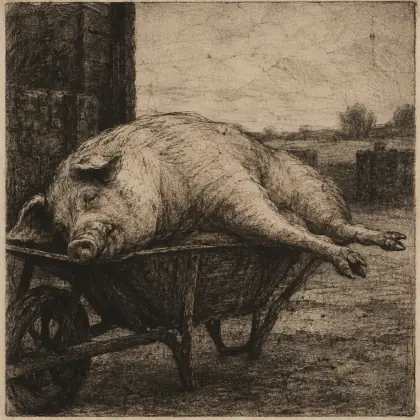
The pig lay on a barrow dead. It weighed, they said, as much as three men. Its eyes closed, pink white eyelashes. Its trotters stuck straight out. Such weight and thick pink bulk Set in death seemed not just dead. It was less than lifeless, further off. It was like a sack of wheat. I thumped it without feeling remorse. One feels guilty insulting the dead, Walking on graves. But this pig Did not seem able to accuse. It was too dead. Just so much A poundage of lard and pork. Its last dignity had entirely gone. It was not a figure of fun. Too dead now to pity. To remember its life, din, stronghold Of earthly pleasure as it had been, Seemed a false effort, and off the point. Too deadly factual. Its weight Oppressed me—how could it be moved? And the trouble of cutting it up! The gash in its throat was shocking, but not pathetic. Once I ran at a fair in the noise To catch a greased piglet That was faster and nimbler than a cat, Its squeal was the rending of metal. Pigs must have hot blood, they feel like ovens. Their bite is worse than a horse’s— They chop a half-moon clean out. They eat cinders, dead cats. Distinctions and admirations such As this one was long finished with. I stared at it a long time. They were going to scald it, Scald it and scour it like a doorstep.
View of a Pig - meaning Summary
Death Beyond Easy Sympathy
The poem confronts a dead pig as an object of sheer physical fact rather than a creature inviting easy pity. The speaker’s memories of pigs as noisy, powerful, dangerous animals sharpen the contrast with the inert body. Its death removes familiar categories such as dignity, humor, and sympathy, leaving the speaker unsettled by its weight and by the practical violence of turning it into meat.
Feel free to be first to leave comment.