
The River in March
Now the river is rich, but her voice is low. It is her Mighty Majesty the sea Travellings among the villages incognito. Now the river is poor. No song, just a thin mad whisper. The winter floods have ruined her. She squats between draggled banks, fingering her rags and rubbish. And now the river is rich. A deep choir. It is the lofty clouds, that work in heaven, Going on their holiday to the sea. The river is poor again. All her bones are showing. Through a dry wig of bleached flotsam she peers up ashamed From her slum of sticks. Now the river is rich, collecting shawls and minerals. Rain brought fatness, but she takes ninety-nine percent Leaving the fields just one percent to survive on. And now she is poor. Now she is East wind sick. She huddles in holes and corners. The brassy sun gives her a headache. She has lost all her fish. And she shivers. But now once more she is rich. She is viewing her lands. A hoard of king-cups spills from her folds, it blazes, it cannot be hidden. A salmon, a sow of solid silver, Budges to glimpse it.
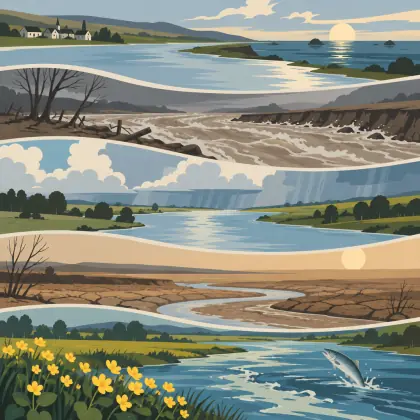
The River in March - form Summary
Alternating Riches and Ruin
The poem is organized around repeated shifts between the river being “rich” and “poor,” a structure that mirrors March’s unstable weather. Each change alters the river’s scale, sound, and apparent health: it can seem like the sea or the clouds, then like a ruined, exposed creature. The final return to richness brings spring growth and wildlife, but does not erase the season’s harshness.
Feel free to be first to leave comment.