
Thistles
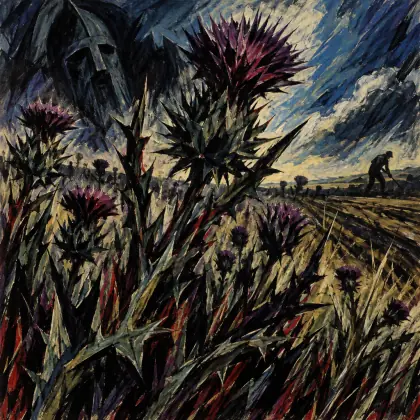
Against the rubber tongues of cows and the hoeing hands of men Thistles spike the summer air And crackle open under a blue-black pressure. Every one a revengeful burst Of resurrection, a grasped fistful Of splintered weapons and Icelandic frost thrust up From the underground stain of a decayed Viking. They are like pale hair and the gutturals of dialects. Every one manages a plume of blood. Then they grow grey like men. Mown down, it is a feud. Their sons appear Stiff with weapons, fighting back over the same ground.
Thistles - meaning Summary
Wildness Returns as Feud
The poem presents thistles as stubborn survivors in conflict with farming and grazing. Their sharp growth is imagined as a kind of inherited revenge, linked to buried Viking violence and to regional speech. When people cut them down, the plants return through their "sons," turning an ordinary field into a recurring feud between human control and resilient wild life.
Feel free to be first to leave comment.