
Still Life
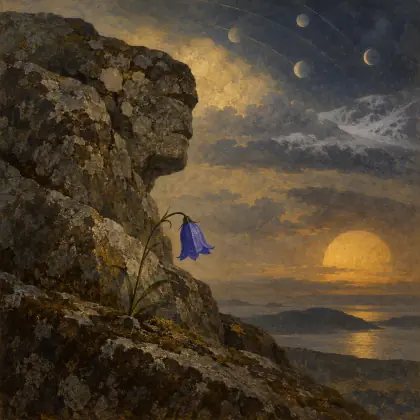
Outcrop stone is miserly With the wind. Hoarding its nothings Letting wind run through its fingers It pretends to be dead of lack Even its grimace is empty Warted with quartz pebbles from the sea’s womb It thinks it pays no rent Expansive in the sun’s summerly reckoning Under rain, it gleams exultation blackly As if receiving interest Similarly, it bears the snow well Wakeful and missing little and landmarking The fly-like dance of the planets The landscape moving in sleep It expеcts to be in at the finish Being ignorant of this othеr, this harebell That trembles, as under threats of death In the summer turf’s heat-rise And in which — filling veins Any known name of blue would bruise Out of existence — sleeps, recovering The maker of the sea
Still Life - meaning Summary
Endurance and Hidden Creation
The poem contrasts an apparently self-sufficient outcrop of stone with a fragile harebell growing nearby. The stone seems proud of its endurance, treating wind, rain, snow, and time as conditions it can outlast. Yet the flower contains a subtler, generative power: its intense blue and hidden life suggest a force capable of remaking the natural world. Hughes questions which kind of permanence truly matters.
Feel free to be first to leave comment.