
Thrushes
Terrifying are the attent sleek thrushes on the lawn, More coiled steel than living - a poised Dark deadly eye, those delicate legs Triggered to stirrings beyond sense - with a start, a bounce, a stab Overtake the instant and drag out some writhing thing. No indolent procrastinations and no yawning states, No sighs or head-scratchings. Nothing but bounce and stab And a ravening second. Is it their single-mind-sized skulls, or a trained Body, or genius, or a nestful of brats Gives their days this bullet and automatic Purpose? Mozart's brain had it, and the shark's mouth That hungers down the blood-smell even to a leak of its own Side and devouring of itself: efficiency which Strikes too streamlined for any doubt to pluck at it Or obstruction deflect. With a man it is otherwise. Heroisms on horseback, Outstripping his desk-diary at a broad desk, Carving at a tiny ivory ornament For years: his act worships itself - while for him, Though he bends to be blent in the prayer, how loud and above what Furious spaces of fire do the distracting devils Orgy and hosannah, under what wilderness Of black silent waters weep.
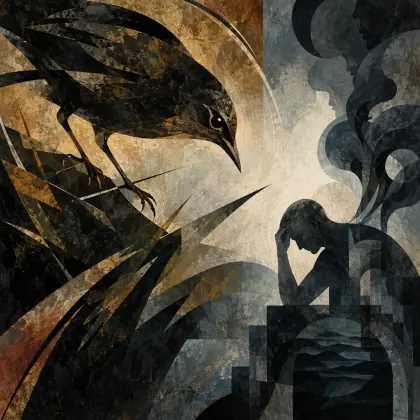
Thrushes - meaning Summary
Instinct Against Divided Consciousness
The poem contrasts the thrushes' swift, instinctive hunting with human action, which is slowed and complicated by self-awareness, ambition, ritual, and inner conflict. Hughes sees the birds as frighteningly efficient: wholly absorbed in survival and appetite. Human beings may attempt heroic or devoted work, but their efforts are shadowed by distracting impulses and profound emotional depths. The poem questions whether instinctive purpose is enviable or inhuman.
Feel free to be first to leave comment.