
Clocks
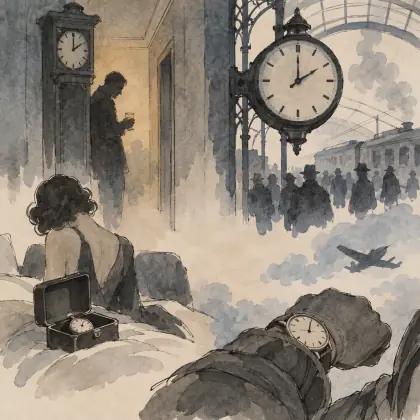
HERE is a face that says half-past seven the same way whether a murder or a wedding goes on, whether a funeral or a picnic crowd passes. A tall one I know at the end of a hallway broods in shadows and is watching booze eat out the insides of the man of the house; it has seen five hopes go in five years: one woman, one child, and three dreams. A little one carried in a leather box by an actress rides with her to hotels and is under her pillow in a sleeping-car between one-night stands. One hoists a phiz over a railroad station; it points numbers to people a quarter-mile away who believe it when other clocks fail. And of course ... there are wrist watches over the pulses of airmen eager to go to France.
Clocks - context Summary
Published in 1916
Published in Chicago Poems (1916), Sandburg's "Clocks" sketches a series of personified timepieces that register lives and social scenes across the modern city. Each clock marks ordinary and fraught moments—domestic decline, an actress's itinerant existence, a station's public authority—and finally a wristwatch on airmen bound for France. The poem links mechanized timekeeping to human circumstance and the era's social and wartime rhythms.
Feel free to be first to leave comment.