
From the Tenth Elegy
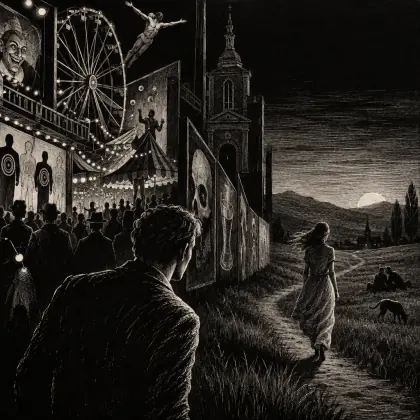
Ah, but the City of Pain: how strange its streets are: the false silence of sound drowning sound, and there--proud, brazen, effluence from the mold of emptiness-- the gilded hubbub, the bursting monument. How an Angel would stamp out their market of solaces, set up alongside their church bought to order: clean and closed and woeful as a post office on Sunday. Outside, though, there's always the billowing edge of the fair. Swings of Freedom! High-divers and Jugglers of Zeal! And the shooting gallery with its figures of idiot Happiness which jump, quiver, and fall with a tinny ring whenever some better marksman scores. Onward he lurches from cheers to chance; for booths courting each curious taste are drumming and barking. And then--for adults only-- a special show: how money breeds, its anatomy, not some charade: money's genitals, everything, the whole act from beginning to end--educational and guaranteed to make you virile . . . . . . . . . . . . . Oh, but just beyond that, behind the last of the billboards, plastered with signs for "Deathless," that bitter beer which tastes sweet to those drinking it as long as they have fresh distractions to chew . . . , just beyond those boards, just on the other side: things are real. Children play, lovers hold each other, off in the shadows, pensive, on the meager grass, while dogs obey nature. The youth is drawn farther on; perhaps he's fallen in love with a young Lament . . . . . He pursues her, enters meadowland. She says: "It's a long way. We live out there . . ." Where? And the youth follows. Something in her bearing stirs him. Her shoulders, neck--, perhaps she's of noble descent. Still, he leaves her, turns around, glances back, waves . . . What's the use? She's a Lament. Translated by Edward Snow
From the Tenth Elegy - context Summary
Written Amid Existential Crisis
From the Tenth Elegy, part of Rilke's Duino Elegies, was written during a period of personal crisis and existential questioning. The poem depicts a corrupt, noisy "City of Pain" where commerce, spectacle, and money dominate, then shifts beyond the billboards to a quieter, real life of children, lovers, and nature. A youth follows a personified Lament into meadowland, suggesting love, loss, and the pull of sorrow amid human longing.
Feel free to be first to leave comment.