
Silent Hour
Whoever weeps somewhere out in the world Weeps without cause in the world Weeps over me. Whoever laughs somewhere out in the night Laughs without cause in the night Laughs at me. Whoever wanders somewhere in the world Wanders in vain in the world Wanders to me. Whoever dies somewhere in the world Dies without cause in the world Looks at me.
Translated by Jessie Lamont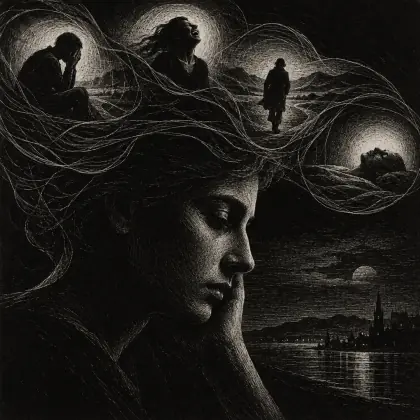
Silent Hour - meaning Summary
Shared Interior of Humanity
Rilke’s "Silent Hour" presents a compact meditation on human interconnectedness and inward projection. Short tercets claim that distant weeping, laughter, wandering, and dying are mirrored in the speaker’s interior; others’ emotions and actions, though occurring "somewhere in the world," become personal encounters. The poem suggests an intimate permeability between self and world, where external events register as direct experiences or reflections within the solitary observer.
Feel free to be first to leave comment.