
The Sonnets to Orpheus: 19.
Though the world keeps changing its form as fast as a cloud, still what is accomplished falls home to the Primeval. Over the change and the passing, larger and freer, soars your eternal song, god with the lyre. Never has grief been possesed, never has love been learned, and what removes us in death is not revealed. Only the song through the land hallows and heals.
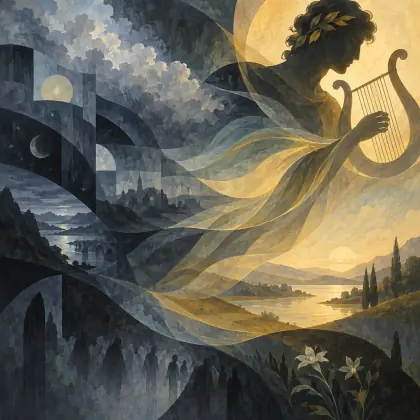
The Sonnets to Orpheus: 19. - context Summary
Composed in 1922
This sonnet, written in 1922 and published in 1923 within The Sonnets to Orpheus, was composed during a burst of creativity after Rilke's daughter died. It uses the sonnet form to assert the persisting power of song or art over worldly change and death. The poem reflects Rilke's preoccupation with transience and the consoling, sanctifying role of poetic music amid loss, fitting the collection's elegiac tone.
Feel free to be first to leave comment.