
To Music
Music: breathing of statues. Perhaps: silence of paintings. You language where all language ends. You time standing vertically on the motion of mortal hearts. Feelings for whom? O you the transformation of feelings into what?--: into audible landscape. You stranger: music. You heart-space grown out of us. The deepest space in us, which, rising above us, forces its way out,-- holy departure: when the innermost point in us stands outside, as the most practiced distance, as the other side of the air: pure, boundless, no longer habitable.
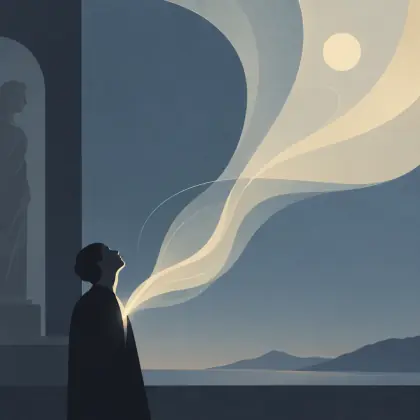
To Music - meaning Summary
Music as Transcendent Silence
Rilke addresses music as a nonverbal, transcendent presence: the "breathing of statues" and the silence where ordinary language ends. The poem argues that music converts inner feeling into an audible landscape, creating a space within us that rises beyond personal habitation. This emergence is described as a holy departure, where the innermost self stands outside itself, becoming pure, boundless, and removed from everyday existence.
Feel free to be first to leave comment.