
The Ashantee
Jardin d'Acclimatation, Paris
No vision of exotic southern countries, No dancing women, supple, brown and tall Whirling from out their falling draperies To melodies that beat a fierce mad call; No sound of songs that from the hot blood rise, No langorous, stretching, dusky, velvet maids Flashing like gleaming weapon their bright eyes, No swift, wild thrill the quickening blood pervades. Only mouths widening with a still broad smile Of comprehension, a strange knowing leer At white men, at their vanity and guile, An understanding that fills one with fear. The beasts in cages much more loyal are, Restlessly pacing, pacing to and fro, Dreaming of countries beckoning from afar, Lands where they roamed in days of long ago. They burn with an unquenched and smothered fire Consumed by longings over which they brood, Oblivious of time, without desire, Alone and lost in their great solitude.
Translated by Jessie Lamont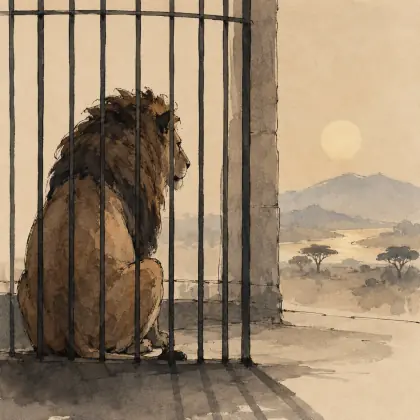
The Ashantee - context Summary
Jardin D'acclimatation Encounter
Rilke's poem records a Parisian encounter at the Jardin d'Acclimatation, rejecting romanticized exotic stereotypes. Instead of dancing, music, or erotic spectacle, the speaker notices captive animals whose calm, knowing expressions seem to judge European visitors. The animals pace and brood with quiet, unfulfilled longing for lost homelands, their restrained fire and solitude emphasizing a tragic dignity and the moral contrast between colonial display and inner life.
Feel free to be first to leave comment.