
The Last Supper
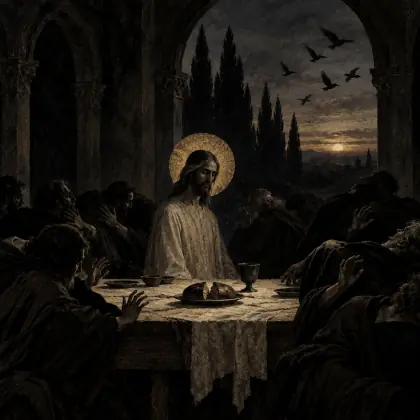
They are assembled, astonished and disturbed round him, who like a sage resolved his fate, and now leaves those to whom he most belonged, leaving and passing by them like a stranger. The loneliness of old comes over him which helped mature him for his deepest acts; now will he once again walk through the olive grove, and those who love him still will flee before his sight. To this last supper he has summoned them, and (like a shot that scatters birds from trees) their hands draw back from reaching for the loaves upon his word: they fly across to him; they flutter, frightened, round the supper table searching for an escape. But he is present everywhere like an all-pervading twilight-hour.
The Last Supper - meaning Summary
Departure Framed as Estrangement
Rilke's poem portrays the Last Supper as a moment of separation and estrangement rather than communal intimacy. The central figure, resolved and solitary, withdraws into an older loneliness even as his followers react with fear and avoidance. Their hands recoil from shared bread; they seek escape while he remains quietly present, a pervasive, twilight-like presence. The poem emphasizes inevitability, emotional distance, and the transformation of a familiar rite into a farewell.
Feel free to be first to leave comment.