
And Thus in Nineveh
Aye! I am a poet and upon my tomb Shall maidens scatter rose leaves And men myrtles, ere the night Slays day with her dark sword. 'Lo ! this thing is not mine Nor thine to hinder, For the custom is full old, And here in Nineveh have I beheld Many a singer pass and take his place In those dim halls where no man troubleth His sleep or song. And many a one hath sung his songs More craftily, more subtle-souled than I; And many a one now doth surpass My wave-worn beauty with his wind of flowers, Yet am I poet, and upon my tomb Shall all men scatter rose leaves Ere the night slay light With her blue sword. ‘It is not, Raana, that my song rings highest Or more sweet in tone than any, but that I Am here a Poet, that doth drink of life As lesser men drink wine.’
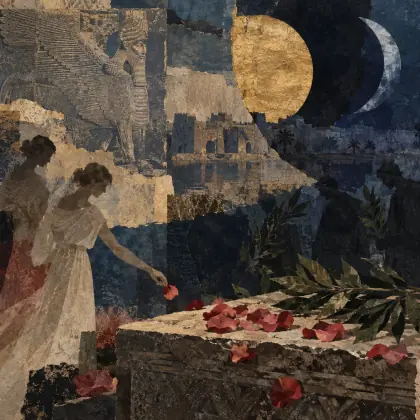
And Thus in Nineveh - meaning Summary
Vocation Over Acclaim
The speaker asserts his identity as a poet and accepts that, despite others’ greater skill or fame, ritual respect will mark his grave. Set in Nineveh, the poem links poetic vocation to an old custom of scattering roses and myrtle, framing mortality as part of a communal tradition. The voice claims value not through superiority of verse but through a wholehearted participation in life that defines him as a poet.
Feel free to be first to leave comment.